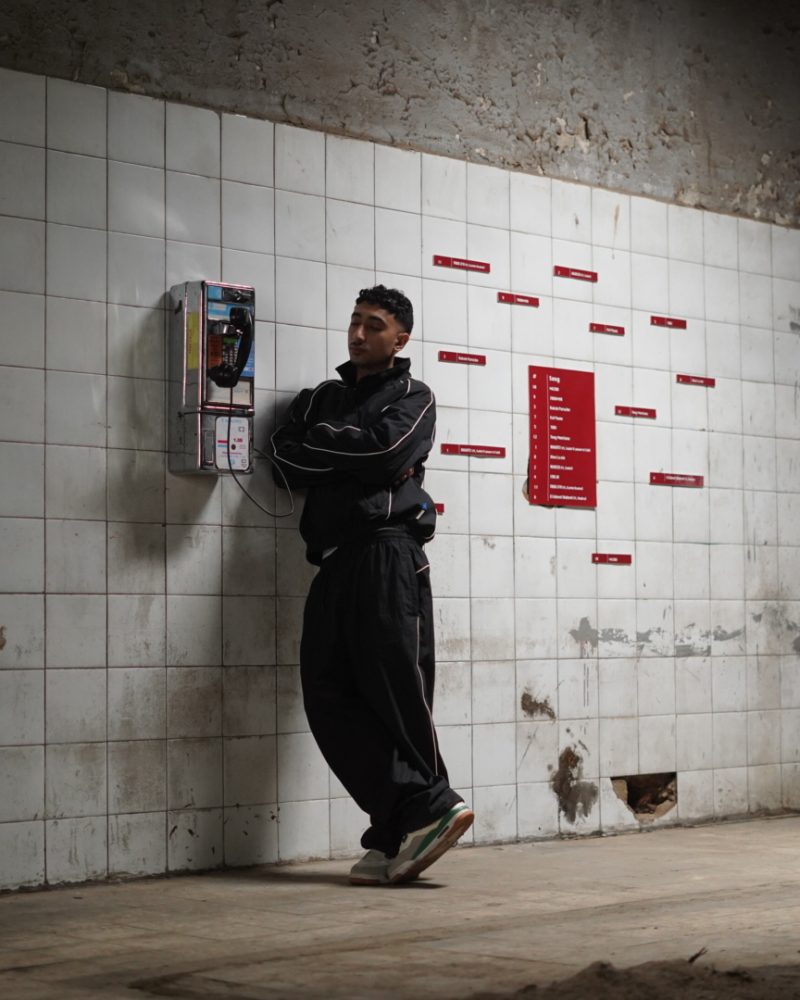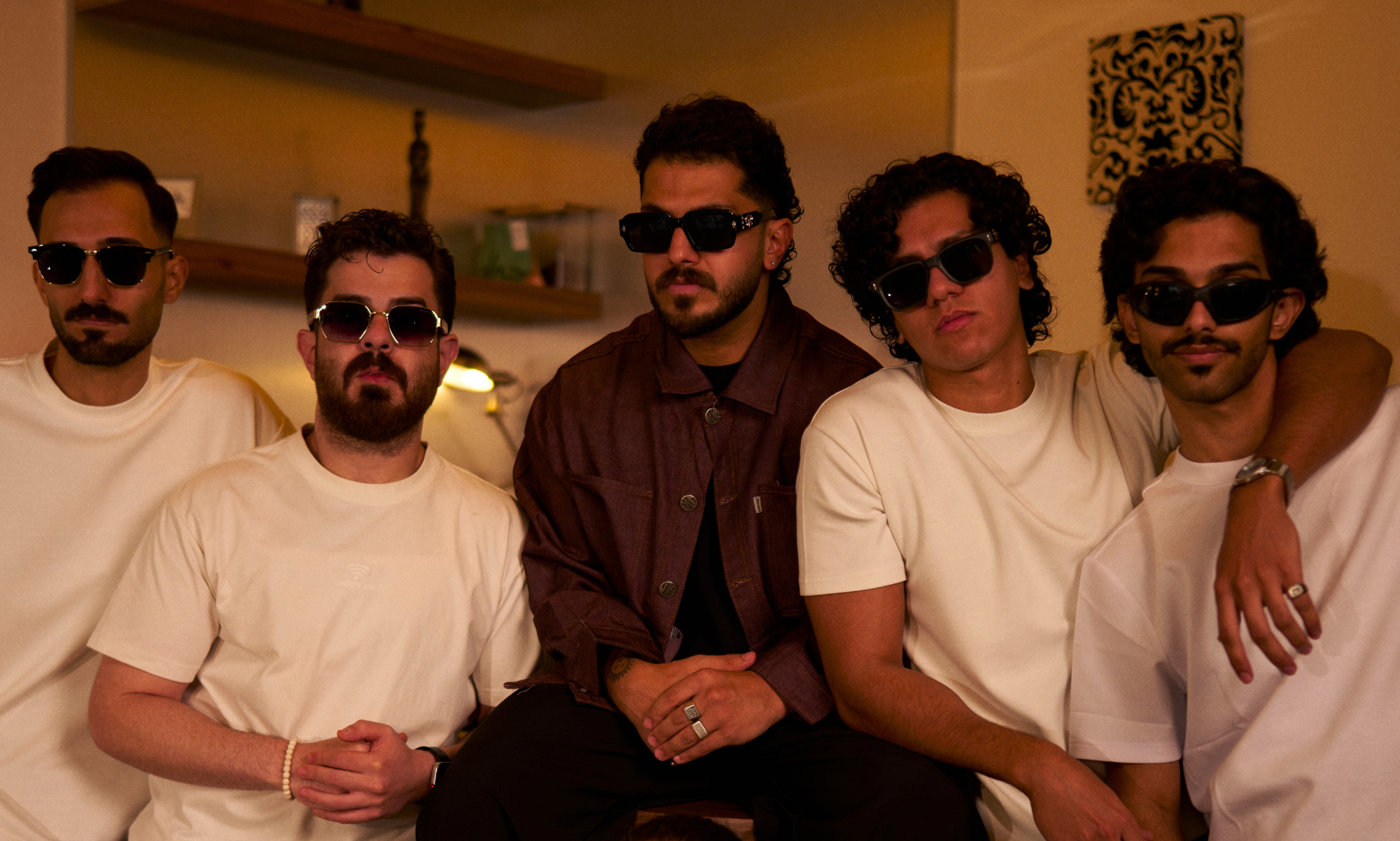
Ali Najm and his newly formed band “26” rework the 1950s Iraqi classic ‘Alojen’, originally performed by singer Zuhour Hussein, with a new arrangement. The remake brings the song into a contemporary live-band setting, reworking a piece of Iraqi musical heritage for audiences encountering it through a different sound and listening culture.
The band reshapes its musical structure, where an acoustic takht arrangement, built around instruments such as the santur, joza, oud, and hand percussion, gives way to electric guitar, bass, piano, a full drum kit, and auxiliary percussion. The production coats the arrangement in warm analog tape saturation, spatial panning, and blooming reverb tails on the piano and electric guitars.
The original recording carries the signature sonic fingerprint of 1950s studio sound, featuring a dry, narrow, mid-range-heavy mono mix recorded live to tape. The Iraqi pesteh tradition is a rhythmic folk form often performed after the more expansive and emotionally intense maqam. Zuhour Hussien’s recordings were widely heard through Iraqi radio and in cafés, becoming part of the musical memory of mid-century Iraq. ‘Alojen’ has since been revisited in other interpretations, and 26’s version continues a longer tradition of Iraqi music being carried forward through reinterpretation rather than kept fixed in its original form.
Baghdad-born singer, producer, and instrumentalist, Ali Najm has spent much of his solo career bringing Iraqi vocal traditions into contact with electronic, R&B, and experimental production. After appearing on the second and third seasons of Arab Idol, he moved toward a more alternative sound, marked by fuzzy basslines, jazz piano, and distorted textures. His 2022 Iraqi Covers EP already explored reworking heritage material, while his 2025 single “Bismar” reframed traditional Iraqi laments through a darker, cinematic production style.
The idea began in London, where a colleague suggested Najm form a band to bring Iraqi music to audiences abroad, and the band 26 takes those studio experiments into a physical, collective setting. Back in Baghdad, he teamed up with a local producer and his pianist brother, gradually assembling a five-piece lineup built around electric guitar, bass, piano, drums, and traditional percussion. The group made its live debut in September with a launch show attended by around 1,000 people. Its standing-room, club-like format also challenges the formal etiquette often associated with heritage music in Baghdad: at the debut, older listeners who knew Hussein’s songs shared the dance floor with younger audiences hearing the lyrics for the first time. With “Alojen,” 26 extends that approach from the stage to its first official release, connecting generations through a familiar melody recast for a new crowd.