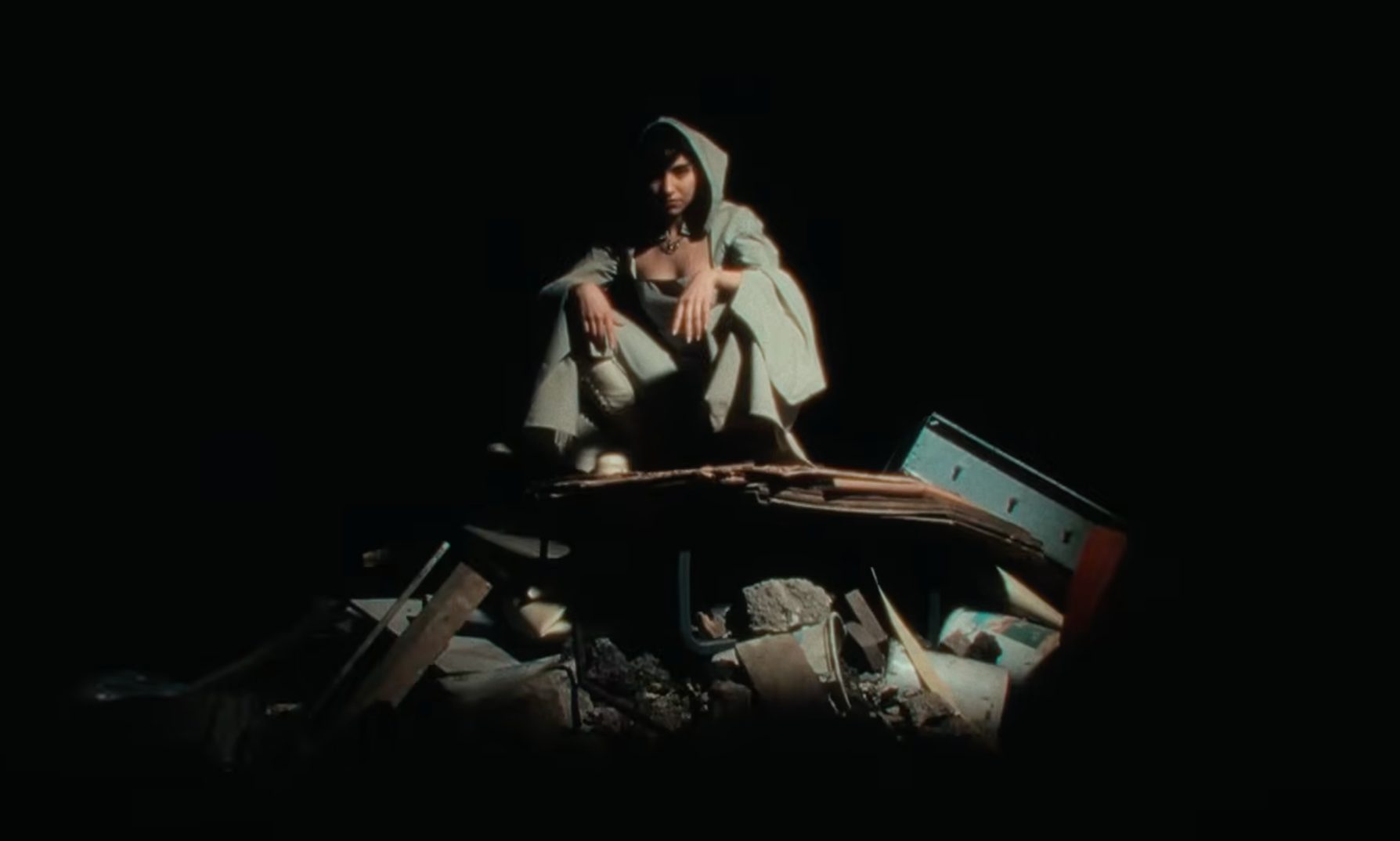
Berlin-based Syrian artist, poet, and activist SIBA explores contemporary geopolitical realities through her debut album ‘Parazeitgeist’, a 19-minute experimental album film that brings together multilingual songwriting, spoken-word poetry, and stark electronic production.
Across seven tracks, four in Arabic and three in English, she moves between anger and vulnerability, addressing colonial violence, ecological collapse, and state oppression while holding onto ancestral memory, indigenous resilience, and love as forms of survival.
The title merges “parasite” with “Zeitgeist,” or the spirit of the times, reflecting a world where political systems and digital realities feed on land, empathy, and truth. That tension runs through the music, which moves between industrial electronics, techno, trip-hop, underground rap, and Levantine folk textures. Heavy basslines, metallic percussion, bleak synths, and shifting rhythms create a cold, imposing soundscape, while microtonal motifs and vocal ornamentation connect the production to the region’s musical heritage.
Moving between spoken word, rap, and chant, the tracks are arranged as sequential compositions, marked with titles such as “C#1” and “C#2,” giving the project the flow of a continuous suite rather than a collection of standalone songs. Sudden beat switches, ambient passages, and abrupt rhythmic shifts echo the instability and rupture explored in the lyrics.
A standout track, ‘Dounana’ (“Without Us”), featuring Monkyman, SIBA critiques post-colonial power structures and environmental destruction, confronting systems that exploit the people and resources they depend on.
Premiered at Berlin’s Moviemento Cinema on October 20, 2026, the accompanying album film extends Parazeitgeist’s stark visual language into a continuous cinematic statement. Created by SIBA Alkhiami alongside her collaborators, it brings together music, cinema, and political activism through stark industrial spaces, minimalist imagery, and a cast featuring artists and community members with migration backgrounds in Germany.
Moving between confrontation and vulnerability, the film explores colonial exploitation, state power, collective grief, and solidarity, including support for Gaza and broader anti-imperial struggles. Its chapter-based structure follows the album’s shifts in rhythm and intensity, while multilingual lyrics and on-screen translations connect regional experiences to wider global struggles. At its core, the film treats rage as a refusal to remain silent, returning to love, community, and the persistence of marginalized identities as forms of resistance.