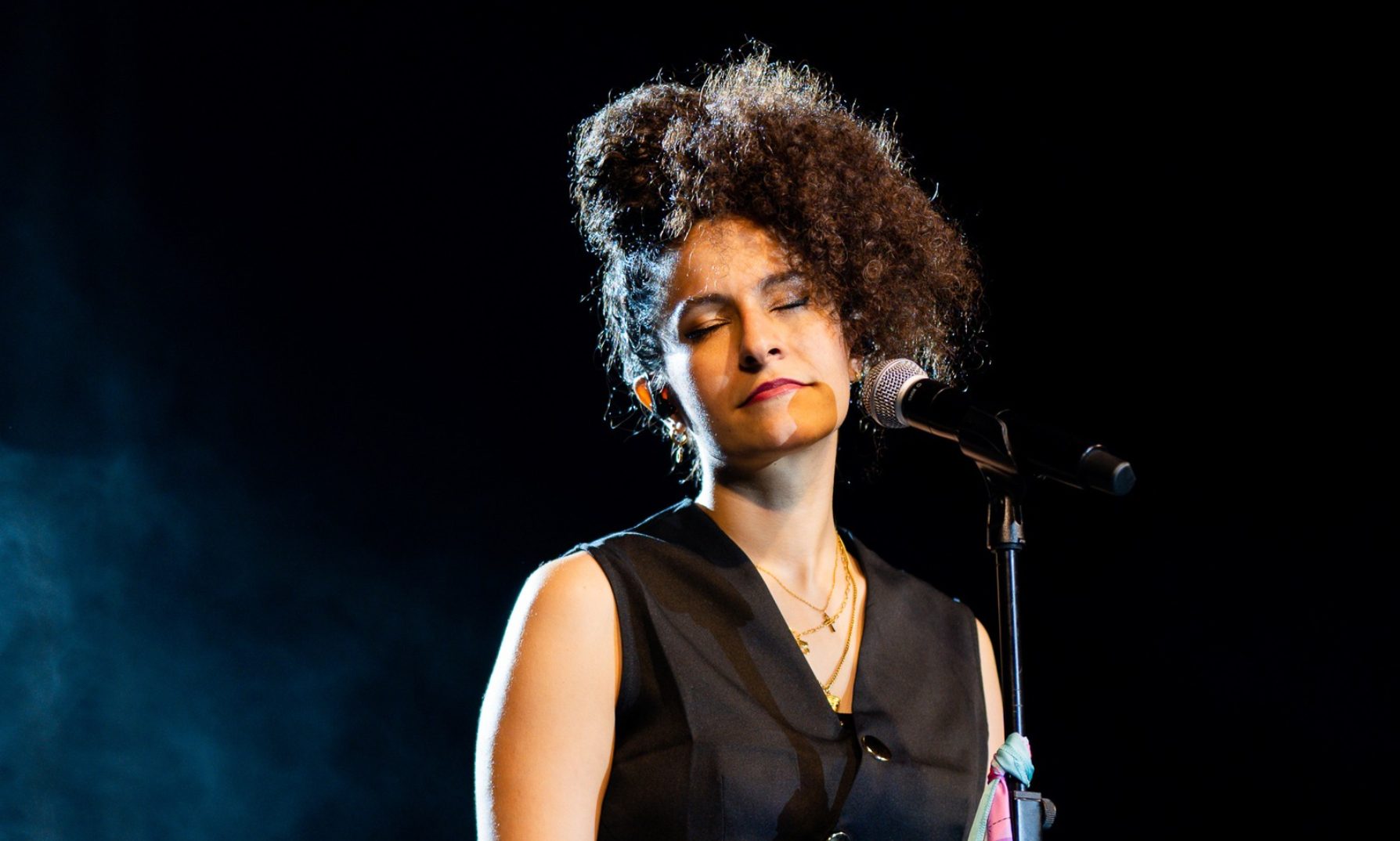
A self-taught singer, songwriter, composer, musician, and writer, Samar Tarik began playing the guitar at the age of 12 and has since carved out her own place in the regional indie music scene through an unconventional approach to music-making. With a distinctive musical taste, she has developed a sound that blends Western guitar arrangements with Oriental vocal melodies, bringing together soulful vocals, acoustic instrumentation, and contemporary indie-folk and alternative influences.
For this feature, Samar Tarik shares five albums that have shaped her approach to music-making, from learning to embrace imperfections and leave space within an arrangement to taking creative risks and reworking local sounds in ways that feel fresh and unexpected.
1. Shababeek – Mohamed Mounir
This Egyptian album marked a turning point in the music scene, with the song ‘3ala El Madeena’ capturing a magical blend of old and new Egyptian sounds at a time when the world was changing rapidly.
The grooves and bass caught my attention from the first listen, moving like a living organism and opening up a completely different way of experiencing music.
2. 1, 2, 3 Soleils – Rachid Taha, Faudel, Khaled
Recorded live in front of an audience of more than 60,000 people, with no cuts or retakes, 1, 2, 3 Soleils captures the meaning of dreams and ambition through an extraordinary live performance.
From the opening moments, the interplay of the audience, lighting, and sound makes the performance feel like more than a concert; it becomes a visual and emotional journey, creating a sense of peace that allows me to fully immerse myself in the moment.
3. Zaman Al Samt – Talal Madah
This Saudi album stands out for its musical arrangements and compositions, which were ahead of their time, while the title track, ‘Zaman Al Samt’, brings poetry and music together in a single artistic canvas.
It makes me pause and reflect on the meaning of the “sound of nature” and how a place can express itself through music.
4. Rifqat Al-Umr – Ramadan Kazouz
Inspired by authentic Libyan heritage, this album captures the connection between music, memory, and everyday life, with ‘Fardat El Raha’ carrying the rhythms of daily existence while opening up space to reflect on the meaning of time.
The album as a whole reflects how music can become a lifelong companion, offering comfort and strength while reminding me that I am part of something much greater than myself.
5. Al Marabet – Ilham Al Madfai
This album represents the revival of Iraqi musical heritage, reinterpreting traditional folklore through a contemporary lens while carrying a dual meaning of romance and resistance.
The song ‘Chal Chal’ lingers long after the music ends, leaving space to reflect on its deeper meaning.